
Category Archives: Federal Criminal Law

Supreme Court Lands Another Blow to Federal “Three Strikes” Law
The Armed Career Criminal Act of 1984 (“ACCA”) is the federal equivalent of the “three strikes” or “repeat offender” laws now in place in…
Supreme Court Confronts Complexity of U.S. Sentencing Guidelines
Federal sentencing is a complex process. The U.S. Supreme Court on April 20, 2016 was forced to confront a conflict among the federal circuits…

Michigan Federal Judges Granting Bond to Violent Criminals
There are two types of crimes in the United States: federal and state law violations. State crimes are a defined by statutes enacted by…

Dog “Deposits” Lead to Attack with Machete: a First for one Federal Court of Appeals
The Sixth Circuit Court of Appeals is the federal appellate court with jurisdiction over U.S. District Courts in Tennessee, Michigan, Kentucky, and Ohio. In…

Failure of Feds to Comply with Title III leads to Suppression of Wiretaps
On April 8, 2016, the D.C. Court of Appeals in United States v. Scurry issued a significant clarification of wiretaps obtained by federal law enforcement agencies…

Deferred Prosecution and Non-Prosecution Agreements Used in Corporate Criminal Cases
Historically, federal prosecutors have three ways to handle criminal cases: decline to prosecute, secure a plea agreement, or try the case before a judge…

Supreme Court Prevents Looters from Eviscerating Right to Counsel
The Sixth Amendment right to counsel in this country is constitutionally sacrosanct. It has long been popularly believed that every person in America has…

Supreme Court Reverses Conviction for Failure to Register as Sex Offender
For many sex offenders, the prospect of registration for life is actually worse than imprisonment. Many offenders complain they can never pay their debt to society…
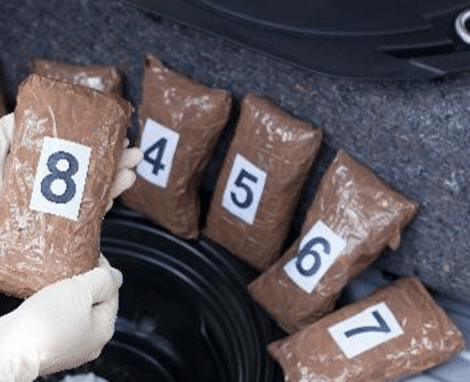
Federal Sentencing Implications When Death or Serious Bodily Injury Results from Use of a Drug
U.S. Sentencing Guideline § 2D1.1(a)(2) applies a base “base offense level” of 38 in certain drug cases when “the offense of conviction establishes that…
No Trespass Signs in Yard, on Front Door, Not Enough to Prevent “Investigative Knock-and-Talk, Create Violation of Fourth Amendment
Ralph Gene Carloss lived in Tahlequah, Oklahoma—a city in Cherokee County located at the foothills of the Ozark Mountains. He is an ex-felon who…
Take the first step toward protecting your freedom by contacting us now
John T. Floyd is Board Certified in Criminal Law By the Texas Board of Legal Specialization











Request A Confidential Consultation
Fields marked with an * are required
"*" indicates required fields


Copyright © 2026 John T. Floyd Law Firm • All rights reserved.
Designed & Developed by
